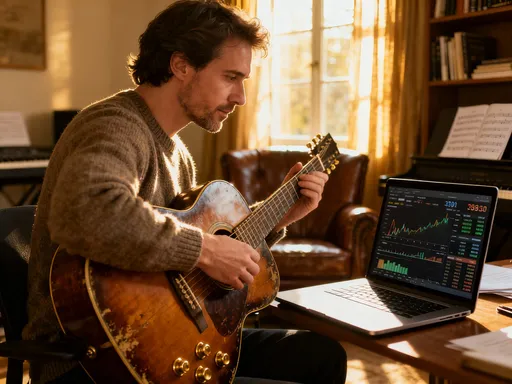
How Art Education Spending Is Shaping Smarter Investment Moves
Have you noticed more parents investing in music, dance, or visual arts for their kids? I did—and it got me thinking. Behind every piano lesson or painting class is a growing market trend with real financial implications. What if your education spending isn’t just a cost, but a signal of where value is building? This shift isn’t just cultural; it’s economic. And smart investors are already paying attention. As families across developed and emerging economies prioritize creative development, they’re unintentionally shaping a new investment landscape. The choices made in suburban homes and urban apartments—whether to enroll a child in ballet or buy a digital drawing tablet—are not isolated personal decisions. They reflect deeper changes in how society values skills, success, and long-term growth. These spending patterns are quietly fueling business expansion, technological innovation, and employment opportunities in a sector once considered peripheral to the mainstream economy. Today, art education is no longer just about self-expression—it’s becoming a measurable driver of economic activity.
The Rising Wave: Art Training as a Financial Indicator
Household spending on art education has grown steadily over the past decade, signaling a broader transformation in consumer priorities. Once viewed as optional enrichment, creative training is now treated by many families as essential to holistic development. This shift is visible in enrollment trends: data from global education analysts show that participation in structured art programs—ranging from private music instruction to after-school theater workshops—has increased by nearly 35% since 2015. In countries like the United States, South Korea, and Germany, where middle-class households have stable disposable incomes, this rise is particularly pronounced. What drives this demand? A growing recognition that creativity complements technical skills, especially in a world where automation and artificial intelligence are reshaping job markets. Parents are increasingly aware that problem-solving, adaptability, and original thinking—skills nurtured through artistic practice—are vital for future employability.
This evolving mindset translates into consistent financial outflows. The average American family spends between $1,200 and $2,500 annually on extracurricular arts activities per child, depending on region and program type. In urban centers like New York or London, those figures can climb higher due to premium studio pricing and specialized instruction. These expenditures do not vanish; they circulate through local economies, supporting instructors, facility rentals, materials suppliers, and digital tools. As such, rising art education spending acts as an early indicator of consumer confidence and willingness to invest in non-essential but high-value services. Economists refer to this category as ‘aspirational consumption’—spending driven not by necessity but by long-term goals and identity formation. When large segments of the population consistently allocate funds toward creative development, it suggests a societal bet on human capital that extends beyond traditional academics.
Moreover, the digital transformation of art instruction has amplified accessibility and scalability. Online platforms offering virtual piano lessons, animation courses, or guided painting sessions have seen exponential user growth. Companies like Outschool and MasterClass report double-digit annual increases in enrollment for creative subjects. These platforms benefit from low marginal costs and global reach, allowing them to convert household spending into sustainable revenue models. The result is a feedback loop: increased demand leads to better offerings, which in turn attract more users and further investment. For financial observers, this pattern mirrors earlier stages of growth seen in fitness tech or language learning apps—sectors that eventually attracted major venture capital and achieved public market success. Therefore, tracking art education spending is not merely about observing cultural preferences; it is about identifying where behavioral shifts align with scalable business potential.
From Expense to Opportunity: Recognizing Market Momentum
What was once considered a personal expense is now emerging as a legitimate investment opportunity. The art education sector is undergoing a quiet but significant commercialization, transforming passionate instructors into entrepreneurs and small studios into growing businesses. This evolution is supported by changing consumer behavior, technological enablement, and institutional recognition of creative skills. Families no longer see art lessons as temporary hobbies—they view them as part of a long-term development strategy. This perception shift creates fertile ground for market expansion. Enrollment data shows that retention rates in quality art programs exceed 65% year-over-year, indicating strong customer loyalty and predictable revenue streams. For investors, such metrics are critical: recurring engagement suggests stability, reducing the volatility typically associated with discretionary spending sectors.
Private academies are leading this transformation. Many operate as small businesses but function with professional management structures, standardized curricula, and performance tracking systems. Some have begun franchising, enabling geographic expansion without sacrificing quality control. These organizations often generate annual revenues between $300,000 and $1 million, with profit margins ranging from 15% to 25%, depending on location and overhead. Unlike traditional retail or hospitality ventures, art education businesses benefit from high customer lifetime value. A student who begins violin lessons at age six may continue for a decade, generating tens of thousands in tuition over time. This longevity creates a compounding effect, making well-run studios attractive targets for acquisition or investment partnerships.
Meanwhile, digital platforms are redefining access and scalability. Subscription-based models dominate the online space, with monthly fees typically ranging from $20 to $80 per user. These services leverage economies of scale—once a course is produced, it can be delivered to thousands with minimal additional cost. Platforms integrating interactive features, such as live feedback or progress analytics, command premium pricing and enjoy higher retention. Investors are taking note: venture funding in edtech companies focused on creative learning reached $480 million in 2023, up from $190 million in 2020. This capital infusion supports product development, marketing, and international expansion, accelerating market maturity. The implication is clear: art education is no longer confined to local studios or school programs. It is evolving into a structured, measurable, and increasingly profitable industry.
Where the Money Flows: Mapping the Art Education Ecosystem
The financial ecosystem surrounding art education is more complex than it first appears. While direct instruction captures the most attention, the flow of money extends across multiple interconnected layers. At the core are the providers—local studios, independent teachers, franchised chains, and digital platforms. But surrounding them is a network of enablers: instrument manufacturers, software developers, performance venues, certification bodies, and even insurance providers specializing in creative professionals. Each segment plays a role in sustaining and growing the sector. Understanding how value moves through this system allows investors to identify not only where growth is occurring but also where risks and inefficiencies lie.
Local studios remain the backbone of in-person instruction, particularly in music and dance. These businesses often operate in leased commercial spaces, employing multiple instructors and serving hundreds of students annually. Their revenue depends heavily on enrollment density and pricing power, which vary by neighborhood and demographic. Urban areas with high concentrations of educated, affluent families tend to support premium pricing, while suburban and rural studios rely on volume and community partnerships. Despite their importance, many local studios operate with limited financial infrastructure—manual billing, paper records, and cash-based transactions—which can hinder scalability and investor appeal. However, those that adopt digital management tools, such as automated scheduling and online payment systems, see improved efficiency and transparency, making them better positioned for growth or acquisition.
Franchised chains represent a more standardized alternative. Brands like School of Rock or Kumon Arts (where applicable) offer turnkey solutions for entrepreneurs, including branding, curriculum, and operational support. These models reduce startup risk and accelerate market entry, though they require upfront fees and ongoing royalties. From an investment standpoint, franchises provide clearer financial reporting and brand consistency, making them easier to evaluate and scale. Data shows that franchise-owned art education centers achieve higher average revenues than independent studios, primarily due to marketing advantages and customer trust in established names.
Digital platforms occupy a distinct and rapidly expanding layer. They serve both as direct educators and as aggregators, connecting learners with freelance instructors worldwide. Their business models vary: some charge per class, others offer subscriptions, and a few operate on a freemium basis with premium upgrades. The key advantage of digital delivery is reach—students in remote regions can access world-class instruction, and instructors can monetize their expertise beyond local constraints. However, competition is intense, and user acquisition costs are rising. Success depends on content quality, user experience, and retention strategies. Companies that integrate artificial intelligence for personalized learning paths or real-time feedback are gaining a competitive edge, attracting both users and investors.
Balancing Risk: When Passion Meets Practicality
Despite its growth, the art education sector is not immune to economic pressures. Like any industry dependent on discretionary income, it faces cyclical risks. During periods of financial uncertainty—such as recessions or rising living costs—families often reevaluate non-essential spending. Art lessons, no matter how valued, may be among the first expenses cut. Historical data from the 2008 financial crisis shows that enrollment in private arts programs declined by 18% to 22% in the hardest-hit regions, with recovery taking up to three years. This sensitivity underscores the importance of financial resilience for businesses in this space. Operators relying solely on monthly tuition without diversified revenue streams are particularly vulnerable.
Another challenge is market saturation, especially in urban areas. In cities like Los Angeles, Toronto, or Sydney, the number of private music and dance studios has grown faster than population demand in certain neighborhoods. This oversupply leads to price competition, reduced profit margins, and instructor poaching. High turnover among teaching staff further destabilizes operations, as continuity is essential for student progress and parental satisfaction. Studios that fail to invest in instructor compensation, professional development, or workplace culture struggle to retain talent, ultimately affecting service quality and reputation.
Additionally, regulatory and liability concerns can pose hidden risks. Studios hosting in-person classes must comply with zoning laws, safety codes, and insurance requirements. Dance schools, for example, face higher liability risks due to physical activity, requiring specialized coverage. Digital platforms, meanwhile, navigate data privacy regulations, especially when serving minors. Non-compliance can result in fines or operational disruptions. These factors do not negate the sector’s potential, but they highlight the need for prudent risk assessment. Investors should look beyond surface-level enthusiasm and evaluate business models for sustainability, operational rigor, and adaptability to changing conditions.
Smart Strategies: Investing with Insight, Not Emotion
To capitalize on the growth of art education without falling prey to its risks, investors must adopt a disciplined, data-driven approach. Emotional attachment to the idea of supporting creativity should not override financial prudence. Instead, focus should be placed on scalable models, recurring revenue structures, and geographic diversification. One effective strategy is to invest in platforms with network effects—where value increases as more users join. Online marketplaces that connect students with instructors, for instance, benefit from two-sided growth: more teachers attract more learners, and vice versa. These platforms often achieve higher valuations due to their potential for exponential expansion.
Another promising avenue is franchising. By backing established brands with proven curricula and operational systems, investors can reduce execution risk while gaining exposure to multiple locations. Franchise models also allow for portfolio diversification—owning several units across different regions mitigates local economic fluctuations. Additionally, franchisors often provide centralized marketing, training, and financial reporting, enhancing transparency and accountability. For private investors or family offices, this structure offers a balance between control and operational ease.
Supporting edtech innovation is another strategic entry point. Rather than funding individual studios, investors can back companies developing tools that enhance teaching efficiency—such as AI-powered practice assistants, digital portfolio platforms, or automated assessment software. These solutions serve the entire ecosystem, generating revenue from multiple customer segments. Because they are less labor-intensive and more scalable than service-based models, they often achieve faster growth and higher margins. Venture capital firms increasingly favor such infrastructure plays, recognizing that empowering educators can be more profitable than replacing them.
Beyond the Studio: Ancillary Markets Worth Watching
The economic impact of art education extends far beyond lesson fees. Ancillary markets—those that support or benefit from creative learning—often offer more stable and scalable investment opportunities. Take musical instrument manufacturing, for example. While global sales fluctuate, premium brands in pianos, violins, and wind instruments maintain consistent demand, driven by serious learners and professional aspirants. Companies that produce durable, high-quality instruments enjoy long customer relationships and strong brand loyalty. Moreover, the rise of digital instruments and hybrid acoustic-electric models opens new product categories with higher margins and tech integration potential.
Performance venues and event organizers also gain from increased participation in the arts. Recitals, exhibitions, and competitions require space, staffing, and production support—all of which generate economic activity. Some venues have begun monetizing these events through ticket sales, sponsorships, and media rights, creating additional revenue streams. Similarly, certification and accreditation programs are growing in relevance. As parents seek measurable outcomes, third-party assessments—such as graded music exams or portfolio reviews—provide validation and motivation. Organizations offering recognized certifications can build recurring revenue through exam fees, training materials, and teacher workshops.
Even seemingly peripheral sectors like insurance and financial services are adapting. Specialty insurers now offer policies tailored to performing artists, covering instrument damage, performance cancellation, or travel disruptions. Financial advisors are developing education savings plans that include creative training as an eligible expense, aligning with broader 529-style accounts. These developments reflect a maturing ecosystem where art education is no longer a niche interest but a recognized component of personal and family financial planning.
Future-Proofing: Aligning with Long-Term Shifts
Looking ahead, the value of art education is likely to increase, not diminish. As automation handles routine tasks, human creativity becomes a distinguishing advantage in the workforce. Industries from software design to healthcare innovation are placing greater emphasis on imaginative thinking, emotional intelligence, and visual communication—skills cultivated through artistic training. Companies like Apple, Google, and IDEO have long championed design thinking, integrating artistic principles into product development and user experience. This trend suggests that early investment in creative skills will continue to yield returns, both personally and economically.
For investors, this means the current momentum in art education is not a passing fad but part of a structural shift. The integration of arts into STEM (forming STEAM) in school curricula worldwide reflects institutional recognition of its importance. Governments and nonprofits are also increasing funding for creative programs, viewing them as tools for social development and economic inclusion. These macro-level supports reinforce market stability and expand the customer base beyond affluent households.
The most strategic investors will not wait for full maturity to act. By understanding the ecosystem, assessing risks, and focusing on scalable, resilient models, they can position themselves to benefit from long-term growth. Whether through direct investment, partnership, or portfolio diversification, engaging with the art education sector offers more than financial return—it aligns with a future where human creativity is not just celebrated but essential.