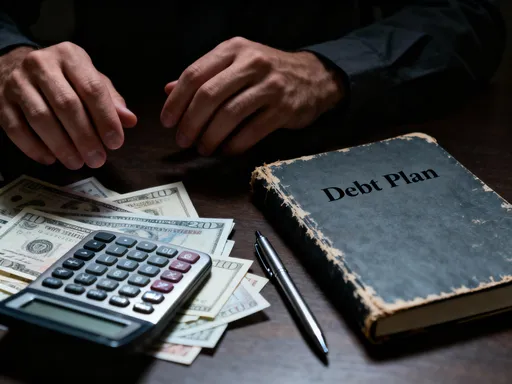
Debt Turnaround Playbook: How I Boosted Gains While Fixing My Finances
You ever feel like your debts are snowballing while your income just treads water? I’ve been there—staring at bills, stressed and stuck. But what if fixing your debt didn’t just stop losses, but actually created financial momentum? This is the real talk on turning crisis into strategy: not just surviving debt, but reshaping your money habits to reclaim control and build quiet gains, step by step. It’s not about overnight miracles or risky bets. It’s about smart, structured choices that compound over time—choices that transform the weight of debt into the foundation of lasting financial strength. The journey begins not with more money, but with better clarity.
Hitting the Wall: The Real Moment Debt Stops Being Manageable
There’s a moment—quiet, unannounced—when debt shifts from a background stress to a full-blown crisis. It’s not always marked by a missed payment or a call from a collector. Sometimes, it’s the silence after opening a credit card statement, the slow realization that minimum payments are no longer covering interest, or the sinking feeling that every paycheck vanishes before it even lands. For many, this breaking point arrives after a job loss, a medical emergency, or a period of unchecked spending during a tough season. Life happens, and finances tilt. But here’s the truth: reaching this point isn’t a personal failure. It’s often the result of systems that make borrowing easy and repayment hard, combined with unpredictable life events that no one plans for.
Consider the case of a single mother working full-time, juggling childcare and rising grocery costs. A minor car repair turns into a $1,200 expense, charged to a card with a 24% interest rate. Minimum payments seem manageable at first—$35 a month. But over time, the balance barely moves, and the stress grows. She’s not overspending now, but the past decision feels inescapable. This is the trap: debt doesn’t just grow on paper; it grows in anxiety, in sleepless nights, in the constant calculation of what can be skipped this week. The emotional toll is real, and it clouds judgment. Many people in this position feel isolated, as if they’re the only ones struggling, when in fact millions face similar challenges. The first step toward recovery isn’t budgeting or balance transfers—it’s recognition. Admitting that the current path isn’t working is not weakness; it’s the beginning of strength.
What makes this moment so pivotal is its potential. Hitting the wall can be a wake-up call, a chance to reassess not just numbers, but values. It forces a confrontation with spending patterns, income limits, and long-term goals. For some, it leads to avoidance—ignoring statements, delaying calls, hoping things improve. But for those ready to act, it becomes the catalyst for change. The key is to see debt not as a moral failing, but as a solvable problem. And like any problem, it requires diagnosis before treatment. That means taking stock: listing every debt, interest rate, and minimum payment. It means facing the total without flinching. This isn’t about shame; it’s about strategy. Once the full picture is clear, the next steps—though challenging—become possible. The wall isn’t the end. It’s the threshold.
Why Most Debt Fixes Fail (And What Actually Works)
Every year, millions of people try to fix their debt with popular solutions: balance transfer cards, consolidation loans, debt management programs. These tools can offer real benefits—lower interest rates, simplified payments, temporary relief. But too often, they fail to deliver lasting results. Why? Because they treat the symptom, not the cause. A balance transfer might move debt to a 0% APR card for 18 months, but if spending habits don’t change, the cycle repeats. The card gets used again, and soon, the person is deeper in debt than before. The flaw in most debt fixes is their reliance on financial engineering alone, without addressing the behavioral and structural issues that led to the problem in the first place.
Take consolidation loans, for example. They can reduce monthly payments by extending the repayment period, making cash flow easier in the short term. But this convenience comes at a cost: more interest over time, and a longer debt timeline. Someone who consolidates $15,000 at a lower rate but over 10 years may end up paying thousands more than if they’d stuck to a faster payoff plan. Worse, the sense of relief can lead to complacency. “I’ve fixed it,” the thinking goes, “so I can relax.” But without a plan to increase income or reduce expenses, the financial foundation remains shaky. Similarly, debt management programs through credit counseling agencies can help negotiate lower interest rates, but they require strict adherence and often take years to complete. Dropout rates are high, especially when unexpected expenses arise.
What actually works is a combination of practical tools and personal discipline. The most effective debt recovery strategies align with a person’s actual income, spending patterns, and psychological tendencies. For instance, someone with irregular income—like a freelancer or seasonal worker—needs a flexible plan, not a rigid one-size-fits-all solution. They need cash flow design that accounts for lean months and windfalls. They need systems that prevent overspending when money is abundant and protect against panic when it’s scarce. This means building a budget that’s not just a list of expenses, but a dynamic tool that adjusts to real life. It also means addressing the emotional side of money: the impulse to spend under stress, the habit of using credit for comfort, the fear of saying no. These behaviors don’t disappear with a lower interest rate. They require awareness, intention, and time.
The real solution, then, is not a single product or trick, but a framework. It starts with a clear picture of all debts, followed by a realistic assessment of income and essential expenses. From there, a repayment strategy is chosen—not based on what’s popular, but on what fits the individual’s psychology and financial rhythm. Some thrive on the mathematical efficiency of the avalanche method (paying highest-interest debt first), while others need the emotional wins of the snowball method (paying smallest balances first). The key is sustainability. A plan that works for six months but collapses in the seventh isn’t success. True progress is measured not by speed, but by consistency. And consistency comes from alignment—between the plan and the person, between actions and values.
Flip the Script: Turning Debt Repair into a Wealth-Building Framework
Debt repayment is often seen as a necessary evil—a long, dull grind with no real reward beyond being “debt-free.” But this view misses a crucial truth: paying off debt is not just about eliminating negatives; it’s about building positive financial strength. Think of it as financial rehab. Just as physical therapy rebuilds muscle after an injury, disciplined debt repayment rebuilds financial resilience. It strengthens credit, improves cash flow, and sharpens decision-making skills. Every payment made with intention is a step toward greater control, not just over money, but over life.
Consider credit scores. As debts are paid down and accounts brought current, credit utilization improves, and payment history strengthens. This isn’t just a number—it’s a key that unlocks better loan terms, lower insurance premiums, and even job opportunities in some fields. A higher credit score means qualifying for a mortgage with a lower interest rate, saving tens of thousands over the life of the loan. It means access to rewards cards with travel benefits, once the financial foundation is solid. These are real financial gains, not abstract benefits. And they stem directly from the discipline of debt repayment.
But the gains go beyond credit. The process of managing debt teaches valuable skills: budgeting, prioritizing, delaying gratification. These are the same skills that drive successful investing, saving, and career advancement. Someone who has navigated a multi-year debt payoff plan has proven they can stick to a long-term goal, manage setbacks, and adapt to change. That’s a powerful form of financial maturity. Employers value reliability; investors value patience. These traits are forged in the daily choices of someone committed to financial recovery.
Moreover, as debt payments are completed, that money doesn’t vanish—it can be redirected. The $200 a month that went to a credit card can now go to a retirement account, an emergency fund, or a home down payment. This is where the real wealth-building begins. The “debt snowball” becomes a “savings snowball.” The momentum shifts from reduction to growth. And because the income is already budgeted, the transition feels natural, not painful. This is the flip: debt repair isn’t the opposite of wealth building; it’s the first phase. It clears the path, strengthens the foundation, and prepares the ground for future gains. The person who once felt trapped by debt becomes the one who confidently directs their money toward goals.
Prioritize with Purpose: Matching Payoff Strategies to Your Income Flow
When it comes to paying off debt, two methods dominate the conversation: the avalanche and the snowball. The avalanche method focuses on paying off debts with the highest interest rates first, minimizing total interest paid. The snowball method prioritizes the smallest balances, creating quick wins that build motivation. Both have merit, but neither is universally superior. The best choice depends on the individual’s income stability, psychological makeup, and financial goals. A salaried worker with predictable pay may thrive on the mathematical logic of the avalanche, while a freelancer with variable income might need the emotional boost of the snowball to stay on track.
For someone with steady income—like a teacher or nurse—the avalanche method can be highly effective. With a consistent paycheck, they can allocate a fixed amount to debt each month, knowing exactly what’s available. By targeting high-interest credit cards first, they reduce the most expensive debt fastest, saving money over time. This approach appeals to those who value efficiency and long-term savings. It’s logical, clean, and results-driven. But it requires patience. If the smallest balance is a $500 medical bill at 8% interest, but there’s a $3,000 credit card at 22%, the avalanche means ignoring the small win. For some, that lack of progress can feel demoralizing, even if it’s mathematically sound.
In contrast, the snowball method offers immediate feedback. Paying off a small debt quickly—like that $500 bill—creates a sense of accomplishment. That payment can then be rolled into the next debt, increasing momentum. This psychological boost is powerful, especially for those who have felt defeated by money. The snowball isn’t about saving the most interest; it’s about building confidence. And for many, that confidence is what sustains the journey. A freelance graphic designer, for example, might have irregular income—$4,000 in one month, $1,800 the next. In lean months, motivation matters more than math. Knocking out a small debt provides a win that fuels persistence.
The key is alignment. A strategy that doesn’t fit the person’s life will fail, no matter how “correct” it is. Some find a hybrid approach works best: using the avalanche for high-interest debts while allowing themselves a small snowball win for morale. Others adjust based on cash flow—focusing on minimums during tight months and attacking debt aggressively during windfalls. The goal isn’t perfection; it’s progress. What matters is consistency, not the method. As long as debts are being paid down systematically, and spending is under control, the path leads forward. The right strategy is the one that sticks.
Free Up Cash Without Cutting Everything (Smart Trade-Offs That Stick)
Most debt advice boils down to “spend less, save more.” But for many, especially busy parents or caregivers, this feels unrealistic. Cutting out all extras—no coffee out, no streaming services, no occasional takeout—may free up $100 a month, but it’s hard to maintain. Deprivation rarely lasts. The smarter approach isn’t elimination, but optimization: making small, high-impact changes that free up cash without sacrificing quality of life. These are trade-offs, not cuts—choices that redirect money toward goals while preserving sanity.
One of the most effective moves is renegotiating recurring bills. Internet, phone, and insurance plans often have hidden flexibility. A quick call to the provider, asking for a retention offer or mentioning a competitor’s rate, can reduce monthly costs by 15% or more. For someone paying $80 a month for internet, that’s $12 saved—$144 a year—without changing usage. Similarly, bundling services or switching providers during renewal periods can yield savings. These aren’t one-time tricks; they’re habits of financial awareness. They teach the value of asking, of comparing, of not accepting the default rate.
Another powerful tool is targeted side income. This isn’t about quitting a job to start a business; it’s about using existing skills for small gains. A teacher might tutor online two evenings a week. A baker might sell cookies at a local market on weekends. These aren’t huge earners, but $200 a month extra, dedicated solely to debt, accelerates payoff significantly. The key is sustainability. If the side work feels like a burden, it won’t last. But if it aligns with interest or routine, it becomes a natural part of the week. And because the income is new, it doesn’t compete with existing budget categories.
Windfalls—tax refunds, bonuses, gifts—offer another opportunity. Instead of spending them on wants, they can be deployed strategically. A $1,200 tax refund applied to a credit card at 20% interest is like earning a 20% return—risk-free. That’s better than most investments. The habit of redirecting windfalls builds financial discipline and compounds results over time. Even small gains, when applied consistently, create momentum. The goal isn’t austerity; it’s intentionality. It’s about making money work, not just stretch.
Protect Progress: Building a Buffer That Prevents Relapse
One of the biggest risks after making progress on debt is relapse. A car repair, a medical bill, a sudden job loss—any unexpected expense can undo months of careful repayment. This is why protection is not optional; it’s essential. But building a full emergency fund while paying off debt feels impossible to many. The solution is the micro-emergency fund: a small, accessible cushion—$500 to $1,000—that stops minor setbacks from becoming major setbacks. It’s not meant to cover job loss or major crises; it’s designed to handle the $300 tire replacement or the $150 vet bill that would otherwise go on a credit card.
Creating this buffer doesn’t require waiting until all debt is gone. In fact, it’s more effective to build it early, even while making payments. Setting aside $25 or $50 a month may seem trivial, but it grows. And when the first unexpected expense hits, and it’s covered without debt, the psychological impact is huge. It reinforces the new financial identity: “I handle things differently now.” This small win builds confidence and prevents the shame spiral that often leads to giving up.
The micro-fund also changes behavior. Knowing there’s a buffer reduces the urge to use credit for emergencies. It allows time to assess options, compare prices, and make thoughtful decisions. It transforms panic into planning. And once the initial cushion is in place, it can grow. As debts are paid off, the freed-up payments can be split—part to savings, part to the next goal. This creates a virtuous cycle: less debt, more savings, greater resilience.
Integrating protection into the repayment plan ensures long-term success. It’s not a distraction; it’s a safeguard. It acknowledges that life is unpredictable, and financial health isn’t just about numbers—it’s about adaptability. A plan that can absorb shocks is stronger than one that collapses under pressure. And strength enables future growth. With a buffer in place, a person can take smart risks—investing, starting a business, changing careers—knowing they have a safety net. This is how financial discipline pays dividends beyond debt.
From Crisis to Clarity: How Financial Discipline Pays Dividends Beyond Debt
The journey from debt crisis to financial stability is transformative. It’s not just about numbers on a spreadsheet; it’s about identity. The person who once felt powerless over money learns they can make choices, stick to plans, and overcome obstacles. This shift in mindset is the true return on investment. The interest saved is measurable, but the confidence gained is priceless. It changes how decisions are made—not just with money, but with time, energy, and goals.
Financial discipline cultivated during debt repayment spills into other areas. Budgeting becomes a tool for intentionality, not restriction. Saving becomes a habit, not a sacrifice. Investing feels less intimidating because the foundation is solid. Career moves are made with more clarity—accepting a lower-paying job with better balance, or pursuing training for a higher-paying role, because the financial runway is secure. These are not small changes; they are life-altering shifts rooted in the quiet power of knowing you can manage money.
And that knowledge compounds. Each successful decision builds on the last. The ability to delay gratification, to prioritize long-term goals, to navigate uncertainty—these skills apply far beyond personal finance. They shape relationships, parenting, and personal growth. The mother who paid off $8,000 in credit card debt teaches her children about responsibility not through lectures, but through example. The single worker who built a buffer after years of living paycheck to paycheck now mentors others at church, sharing what worked. The impact ripples outward.
In the end, overcoming debt isn’t about reaching a finish line. It’s about becoming someone who can handle whatever comes next. It’s about turning a period of struggle into a source of strength. The true wealth isn’t just in the bank account; it’s in the person you become. And that transformation—earned through consistent, disciplined effort—is the quietest, most lasting gain of all.